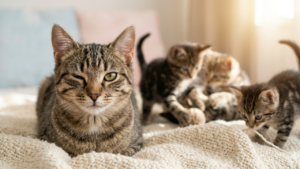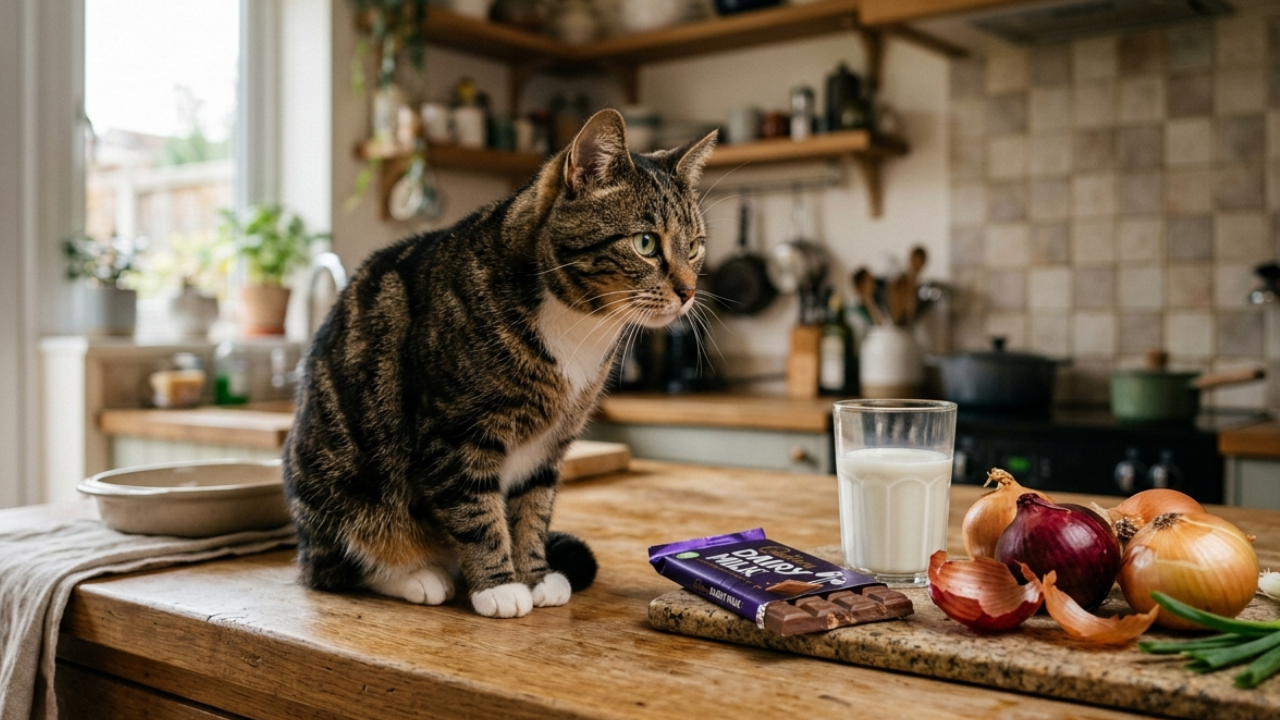
Toxic foods for cats: Cats share their lives with humans in countless homes, yet their instinctive curiosity often drives them to investigate everything around them. Without the ability to distinguish between what is safe and what is harmful, they may unknowingly put themselves at risk. This natural urge to explore becomes especially dangerous when cats are exposed to human foods that can seriously affect their health.
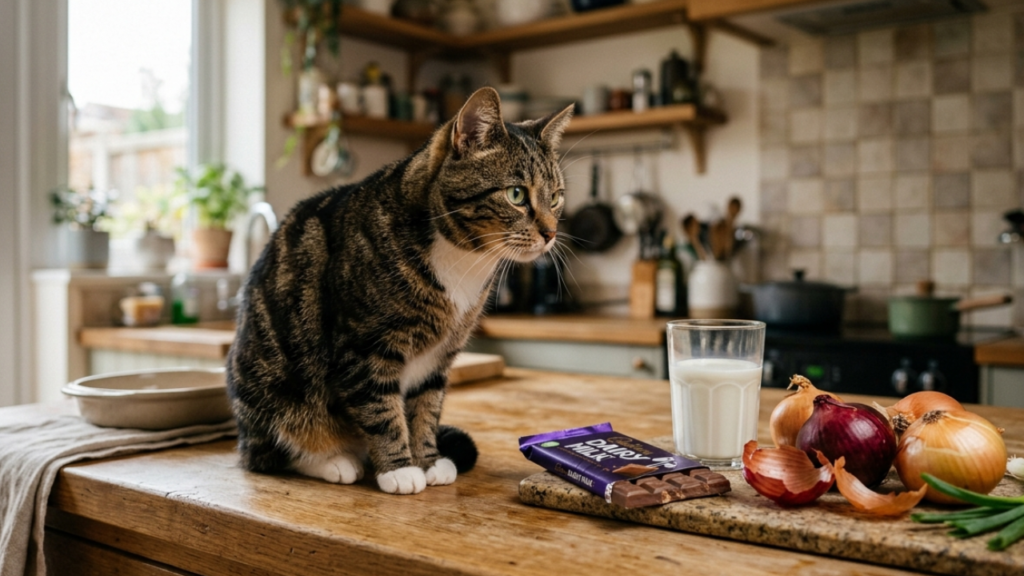
Many cats are tempted to taste what their owners eat, even when those foods are harmful to them. As responsible cat owners, it is essential to know which foods should never be left within a cat’s reach, as some of them can cause serious health problems.
Warning: Never Feed Your Cat These Foods
Below is a detailed guide to foods that should be kept away from your cat in order to protect their health and well-being.
Chocolate
Chocolate poses a serious health risk to cats, making it one of the most dangerous human foods they might encounter. Luckily, most cats are not naturally attracted to chocolate. However, because cats are curious animals, seeing their owners eat it may encourage them to try it.
Chocolate contains a substance called theobromine, which is highly toxic to cats (and dogs as well). Whether it is white chocolate or dark chocolate, all types pose a serious risk and should be kept far away from pets.
Bread with Yeast
Plain bread without yeast can be consumed in very small amounts on rare occasions if a cat shows interest. However, bread that contains yeast is not a good choice for your cat’s digestive system. Yeast can cause stomach discomfort and other digestive issues.
Milk | Toxic foods for cats
Many people believe that milk is harmless—or even beneficial—for cats, especially since images and videos often show cats drinking milk and enjoying it. This can be misleading.
In reality, the majority of cats cannot properly digest lactose. Lactose, which is present in milk, can cause digestive problems. Cats that are sensitive to lactose may suffer from diarrhea and gastrointestinal disturbances after consuming milk.
Eggs
Eggs are generally a good source of protein for cats and can be beneficial when prepared properly. Cooked eggs, offered occasionally, are safe and nutritious.
However, raw eggs should never be given to cats, as they may contain bacteria such as Salmonella, which can cause serious illness. Eggs should never become a cat’s main food source, and it is always best to provide a varied diet to ensure all nutritional needs are met.
Onions and Garlic
Cats usually avoid onions and garlic due to their strong smell, which they find unpleasant. However, they may still consume food that contains them.
Onions are particularly dangerous, as they can destroy red blood cells in cats, leading to anemia. While a very small amount may not cause immediate harm, consuming a large quantity at once—or smaller amounts regularly—can result in onion poisoning. Garlic can also cause uncomfortable digestive issues and should be avoided.
Grapes and Raisins
Some cat owners offer grapes or raisins as treats, and some cats may even pick them up from tables on their own. Despite the lack of a clear scientific explanation for why grapes are toxic to cats, they are considered dangerous.
For this reason, cats should never be allowed to eat grapes or raisins, even in very small quantities.
Tuna Toxic foods for cats
Tuna is often considered a favorite food among cats, but it is a “forbidden love” when offered excessively. Cats can become addicted to tuna and may refuse to eat other foods.
Small amounts of tuna from time to time are safe and enjoyable. However, making tuna a staple food can lead to nutritional deficiencies, as it does not provide all the nutrients cats need. Excessive consumption may also increase the risk of mercury poisoning.
Liver | Toxic foods for cats
Liver can be consumed by cats in limited amounts. Some cats enjoy boiled and mashed liver mixed with potatoes, while others prefer it plain.
Overfeeding liver can cause vitamin A toxicity, which is harmful. When given occasionally and in moderation, however, liver does not pose a problem.
Fish
Cats love fish, and it does not need to be completely excluded from their diet. However, fresh raw fish should not be offered, and care must be taken to remove any bones that could cause choking or internal injuries.
Fish should not be served as a cat’s main meal, as doing so may increase hair loss—a problem commonly observed in cats that rely on fish as a primary food source.
Final Thoughts
Cats are naturally curious animals, and this curiosity means they may try to eat things that are unsafe for them. As caregivers, it is our responsibility to monitor what they consume and ensure their environment is free from harmful foods.
Being informed is the first step toward keeping your cat healthy, safe, and happy.
This article is for informational purposes only. Always consult a veterinarian if your cat consumes something toxic.