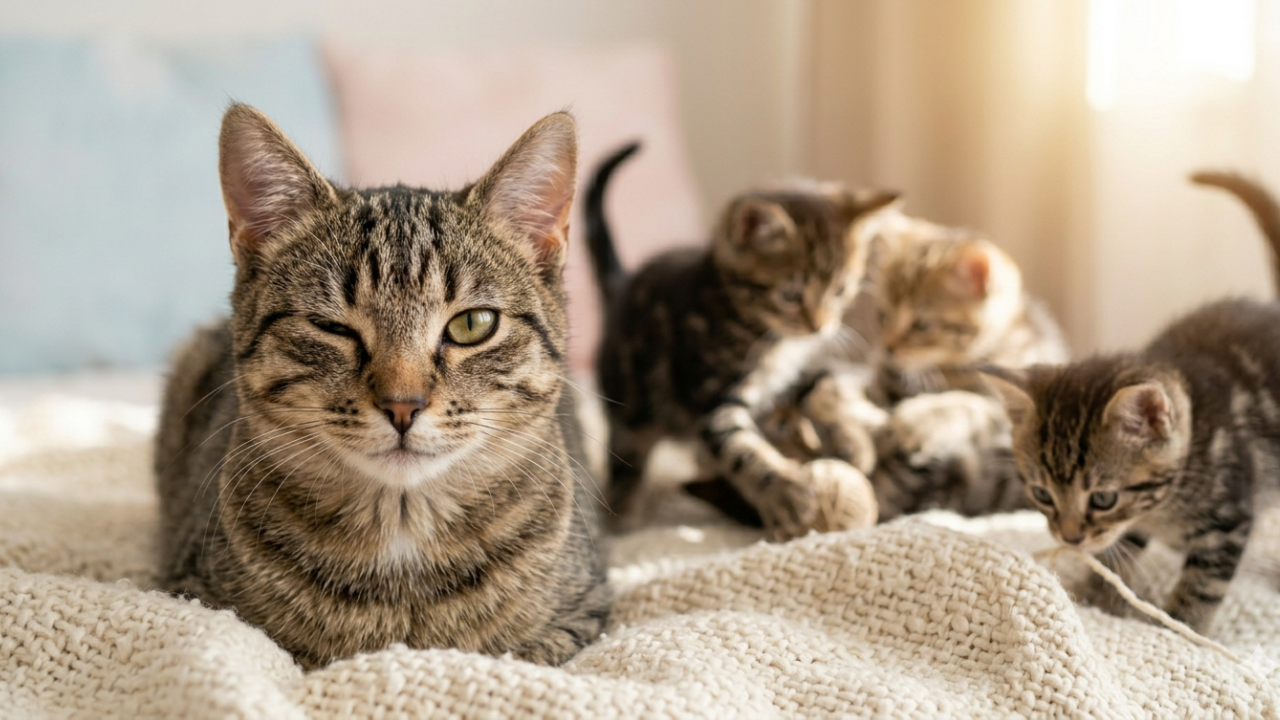
What Age Do Mother Cats Distance From Kittens? Kittens come into the world extremely fragile and vulnerable. For this reason, they depend entirely on their mother to care for them and provide protection. At birth, kittens are blind and do not begin to see until after their first week of life. During this early stage, their survival is closely tied to their mother’s constant presence and care.
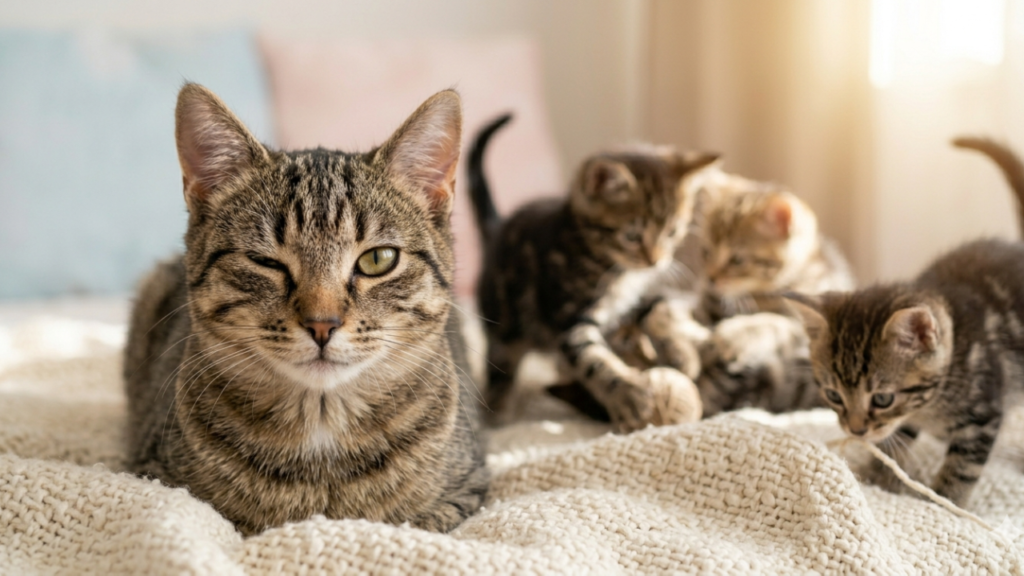
The Early Days: Why Newborn Kittens Depend on Their Mother
A mother cat is well known for her strong attachment to her offspring. Immediately after giving birth, she takes full responsibility for cutting the umbilical cords and cleaning her kittens thoroughly from all traces of birth. Within minutes of their arrival into the world, she begins nursing them, as newborn kittens are unable to eat solid food and rely exclusively on their mother’s milk for nourishment.
see: Understanding Cat Body Language
The mother should not abandon the children!
A deep bond forms between the mother cat and her newborn kittens. This relationship is essential during the early weeks of life, but as part of the natural order, it is not meant to last forever. As kittens grow, they gradually acquire the skills they need to live independently.
By the time kittens reach two months of age, they have learned from their mother many of the abilities necessary for survival and independence. Under natural conditions, when they reach approximately ten weeks of age, the mother cat begins to distance herself from them. This behavior indicates that the kittens are becoming ready to rely on themselves and begin lives of their own.
In some unusual cases, a mother cat may continue nursing her kittens even after they are older than three months. When this happens, it is not advisable to allow the kittens to continue exhausting her energy and affecting her health. In such situations, it becomes necessary to separate them from her. Once this step is taken, the mother cat is typically able to recover her strength and regain her physical well-being.
When a mother cat observes that her kittens have started eating solid food and grooming themselves independently, she begins to push them away. Her firm behavior does not mean that she no longer loves them. Rather, she is encouraging them to depend on themselves so they can establish their own lives. Instinct also plays a role in this process, as it drives her to create space for the possibility of bringing new kittens into the world.
If kittens are taken away from their mother while she is still in the active caregiving phase, the separation can be emotionally painful for her. Such a loss may deeply affect her, causing her to miss them intensely and endure several difficult days after their departure.
Allowing kittens to nurse from their mother until they are six to eight weeks old is always better for their health. Mother’s milk supports healthy growth and helps kittens develop a strong immune system. By the age of eight weeks, a kitten is generally considered ready to live independently in another home with a new family.
When a kitten is introduced to a new home for the first time, it may experience feelings of loneliness and begin searching for its mother and siblings. On the first day, it may spend hours meowing and wandering through the house, or it may withdraw and remain isolated in a corner for most of the day. Providing food and water nearby is important, as the kitten will eventually come out once it feels safe and becomes accustomed to its new environment.
Signs of Labor: How to Know Your Cat is About to Give Birth
Before the 64-day mark, your cat will show clear behavioral changes indicating that the big moment is near. Look for these “labor signs”:
Nesting Behavior: She will search for a quiet, secluded, and warm place to give birth.
Restlessness: You may notice her pacing, excessive grooming, or vocalizing more than usual.
Temperature Drop: A cat’s body temperature often drops slightly about 24 hours before labor begins.
Loss of Appetite: She might stop eating during the last 12 to 24 hours before delivery.
The Delivery Stage: What Happens During Birth?
When labor begins, contractions will start to move the kittens through the birth canal. Usually, kittens are born at intervals of 30 to 60 minutes, although it can sometimes take longer.
Important Note: If your cat has been straining for more than two hours without a kitten appearing, contact your veterinarian immediately.
After each kitten is born, the mother will instinctively tear the amniotic sac and lick the kitten to stimulate its breathing. This is a critical natural process that boosts the newborn’s circulation and clears its airways.
Post-Natal Care: Ensuring a Healthy Start
Once all the kittens have arrived, the mother will enter a period of deep recovery and nursing. During this time:
Minimal Interference: Keep the nesting area quiet. Stress can cause the mother to become anxious or even reject her kittens.
High-Calorie Diet: Continue feeding her high-protein “kitten food” as she needs massive amounts of energy to produce milk for the litter.
Health Monitoring: Watch for any signs of fever or unusual discharge in the mother, as these could indicate a post-birth infection.
Conclusion
The journey of a pregnant cat is a beautiful and delicate process that requires patience and care. By understanding the duration of pregnancy and the specific needs of your cat, you are ensuring a healthy future for both the mother and her new kittens. Remember, while nature does most of the work, your supportive role as an owner is what makes the transition to motherhood smooth and safe.